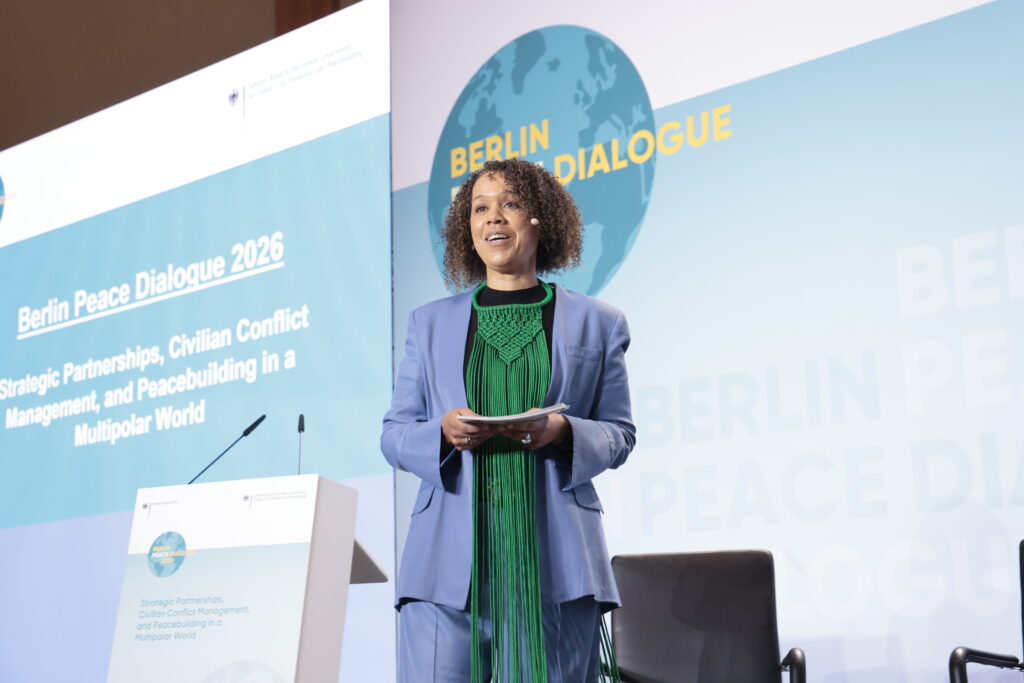
The world is at a crossroads. Conflicts are becoming more frequent, complex, protracted and violent. At the same time, profound geopolitical shifts are reshaping the international landscape. Established forms of cooperation are under increasing pressure, while new ones are emerging. Against this backdrop, the conference explored the central question: How can Germany and its partners build effective and resilient forms of cooperation for civilian conflict management and peacebuilding in a changing geopolitical landscape?
What makes partnerships for peace effective?
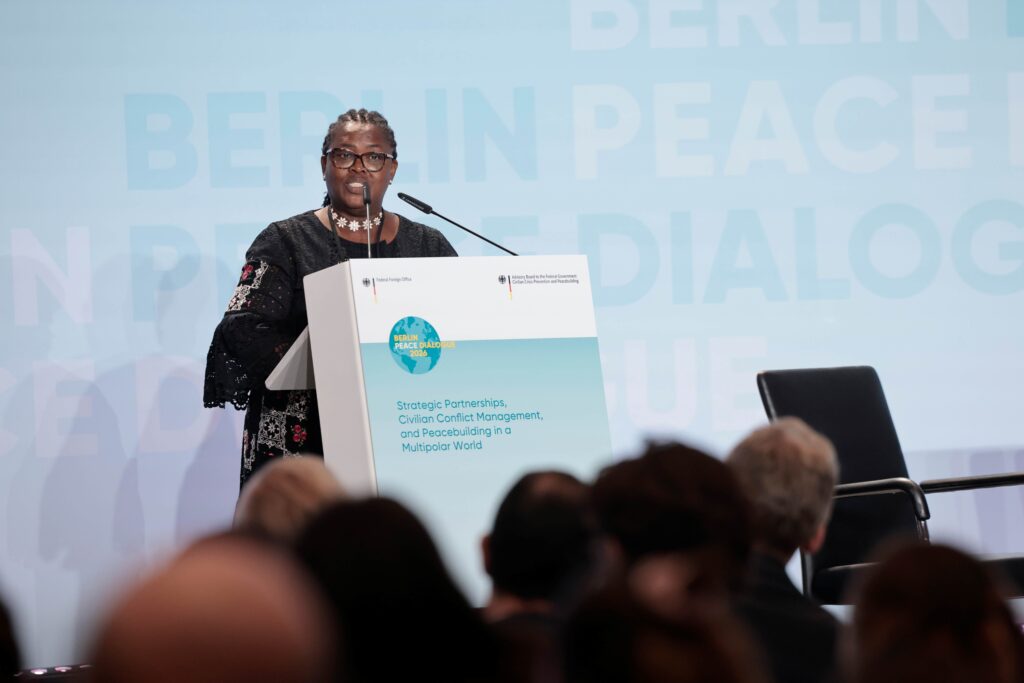
Opening the conference, FriEnt’s Managing Director Nana Odoi, who served as Master of Ceremonies, invited participants to reflect on what it takes to build strategic partnerships for peace today. Trust emerged as a key prerequisite, alongside commitment, cooperation and dialogue.
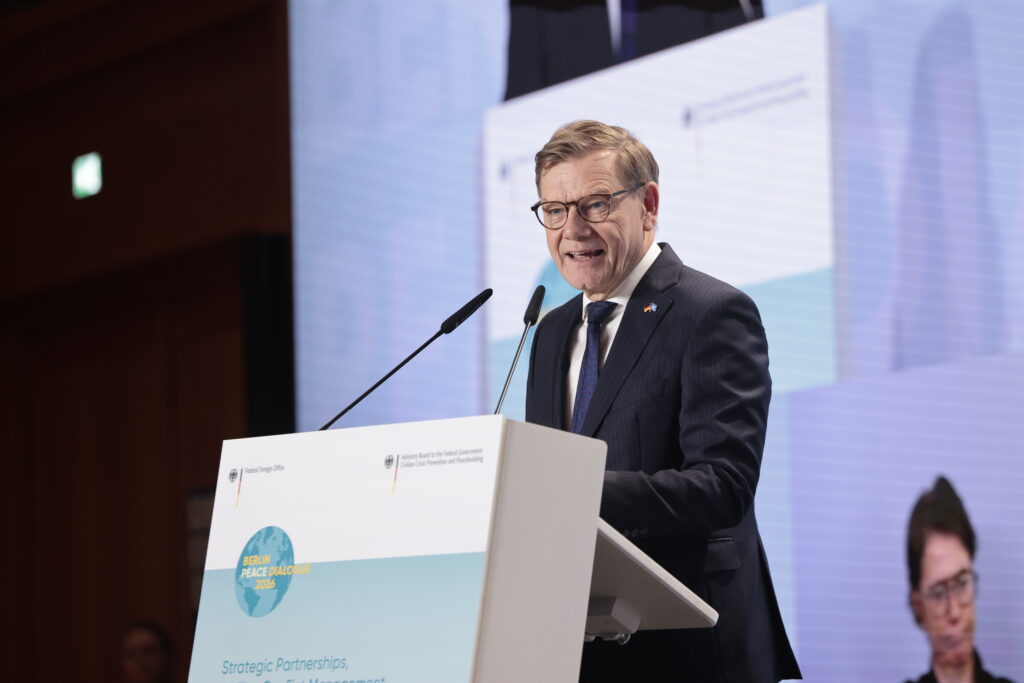
In his opening remarks, Federal Foreign Minister Dr Johann Wadephul emphasised that sustainable peace means more than the absence of war. Alongside defence, he called for sustained investment in civilian crisis prevention, mediation and peacebuilding worldwide.
Former Colombian President and Nobel Peace Prize laureate Juan Manuel Santos drew on Colombia’s experience with the FARC to underline that signing a peace agreement is only the beginning of the long process of building peace.
In her contribution “From Local to Global: Partnerships for Sustainable Peace”, Levinia Addae-Mensah, Executive Director of the West Africa Network for Peacebuilding (WANEP), called for partnerships that go beyond consultation and give local actors a genuine role in planning and decision-making at all levels and overall to build a new ecosystem of cooperation and partnerships to enable real change.
New alliances in a changing geopolitical landscape
In the afternoon, four policy dialogues explored strategic partnerships for peace from different regional and geopolitical perspectives: “New Alliances for Peace (with)in Africa?”, “Latin America Moves Forward”, “Syria in Transition”, and “Middle Powers Rising”.
The closing panel turned to Germany’s role in supporting mediation and peacebuilding in the future, discussing how the country can contribute to stronger, more resilient and more effective partnerships for dialogue, mediation and peacebuilding.
The discussions highlighted the importance of trust, genuine participation and shared responsibility in building partnerships for peace. Against a backdrop of shifting geopolitical realities and reduced financing for peace and development the need to forge effective and equitable alliances for civilian conflict management and peacebuilding remains pressing. While the Berlin Peace Dialogue provided an important forum to address these issues, what is needed now is decisive action.
