Conflict sensitivity, local partnerships and civilian peacebuilding must be guiding principles of the reform
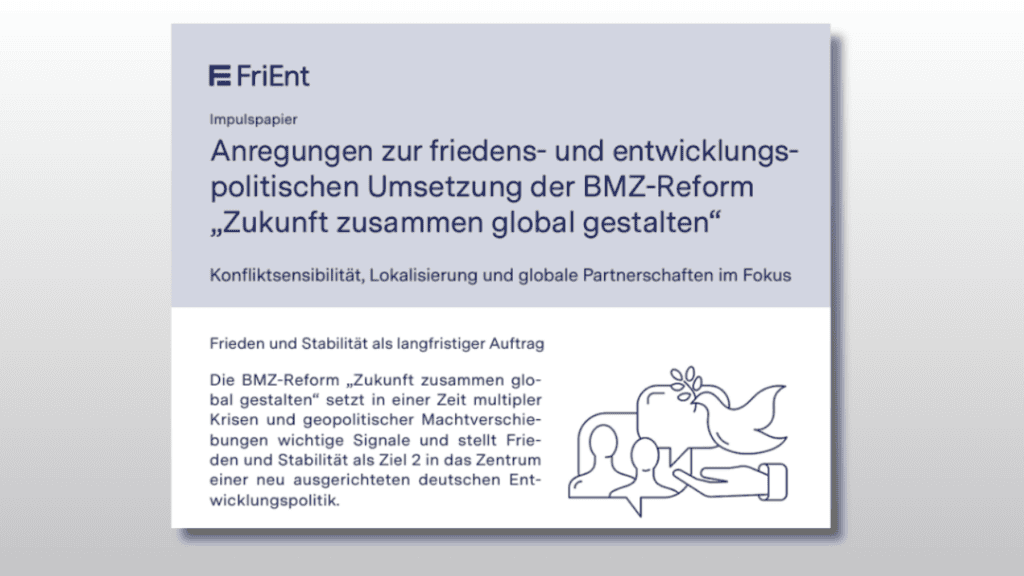
In January 2026, the Federal Ministry for Economic Cooperation and Development (BMZ) presented its reform and strategy plan, “Shaping the Future Together Globally”, which aims to realign German development cooperation in terms of structure, funding and content by summer 2027. In its position paper, FriEnt sets out recommendations on how peace policy perspectives can be considered and further strengthened in this process.

“The clear language used in the reform paper and by the Minister regarding the priority of peacebuilding is encouraging encourages us. Resources and capacity must now be allocated to its implementation – a matter of all the greater urgency in view of further cutback scenarios in the budget planning,” says Beatrix Austin, Head of Department Conflict Transformation Research at the Berghof Foundation and Co-Chair of FriEnt’s Steering Committee.
Conflict sensitivity and local partnerships as key guiding principles
This position paper focuses on embedding conflict sensitivity within institutions, strengthening equal global partnerships and fostering local ownership. FriEnt also emphasises the importance of a strong civil society and the role of civilian crisis prevention and peacebuilding as integral components of German development policy.
Particular attention is paid to the question of how long-term relationships with local partner organisations can be maintained, even under changing circumstances. Particularly in fragile and conflict-sensitive contexts, trust, local expertise and established partnerships are crucial prerequisites for sustainable impact.
“Partnerships are the foundation of effective peacebuilding. In times of declining funding and strategic reorientation, it is all the more important to safeguard and further develop established partnerships,” says Nana Odoi, Managing Director of FriEnt. “The reform agenda provides important impulses and offers genuine opportunities for a sustainable development policy. However, particularly regarding the regions that will be left out as a result of the programme cuts, we would like to see a course correction and the continuation of civil society engagement. Abandoning long-term partnerships risks not only losing influence, but also credibility.”

From FriEnt’s perspective, the reform will be successful if the experiences and perspectives of local actors and civil society organisations are consistently taken into account, and if civilian peacebuilding continues to be recognised as a vital foundation for sustainable development cooperation and as a key contribution to stability and long-term security.
With this position paper, the working group aims to support dialogue between policymakers, civil society and practitioners, and to help ensure that peace policy perspectives are taken into account in the further shaping of the reform agenda.
Please note: This paper is currently only available in German.
The position paper can be downloaded here: Anregungen zur friedens- und entwicklungspolitischen Umsetzung der BMZ-Reform 2026
Further Information:
- The BMZ reform agenda “Shaping the future together globally”
