
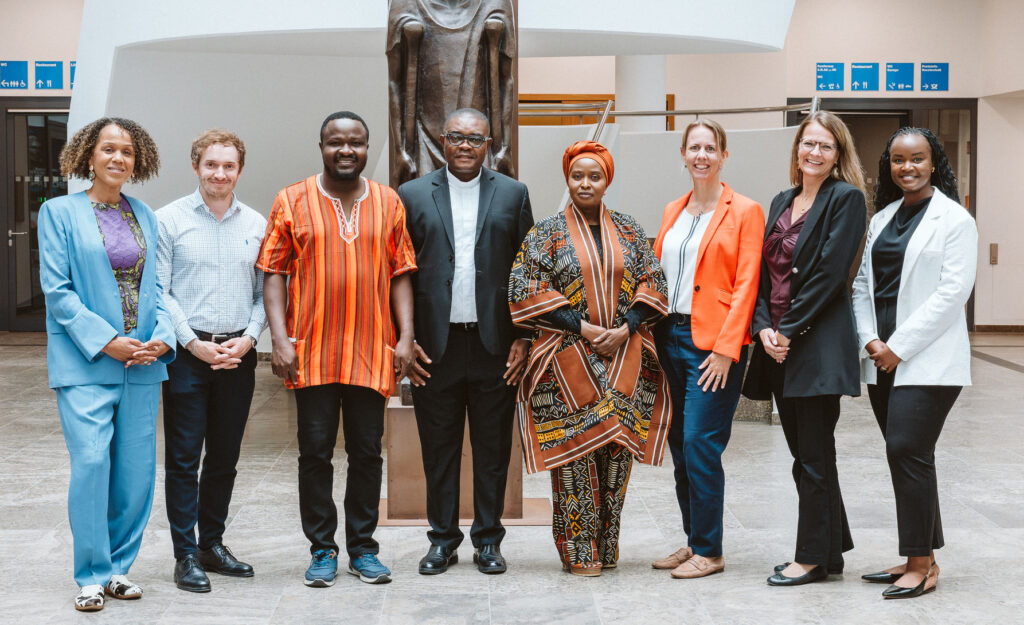
What does it mean for a conflict to be “forgotten”? Not only that it disappears from international headlines, but also that the voices and realities of affected communities remain unheard.
Beyond religious binaries
Participants emphasised that violence in Nigeria’s Northwest and Middle Belt cannot be adequately understood through the lens of religious identity alone. Although religious differences are frequently invoked as a straightforward explanation for the violence, they often obscure the more complex and interconnected factors driving insecurity. Climate stress, competition over land and water, weak governance, criminal economies and the erosion of livelihoods interact to fuel insecurity. Religion can accelerate existing tensions but does not constitute the fundamental driver of the conflict.
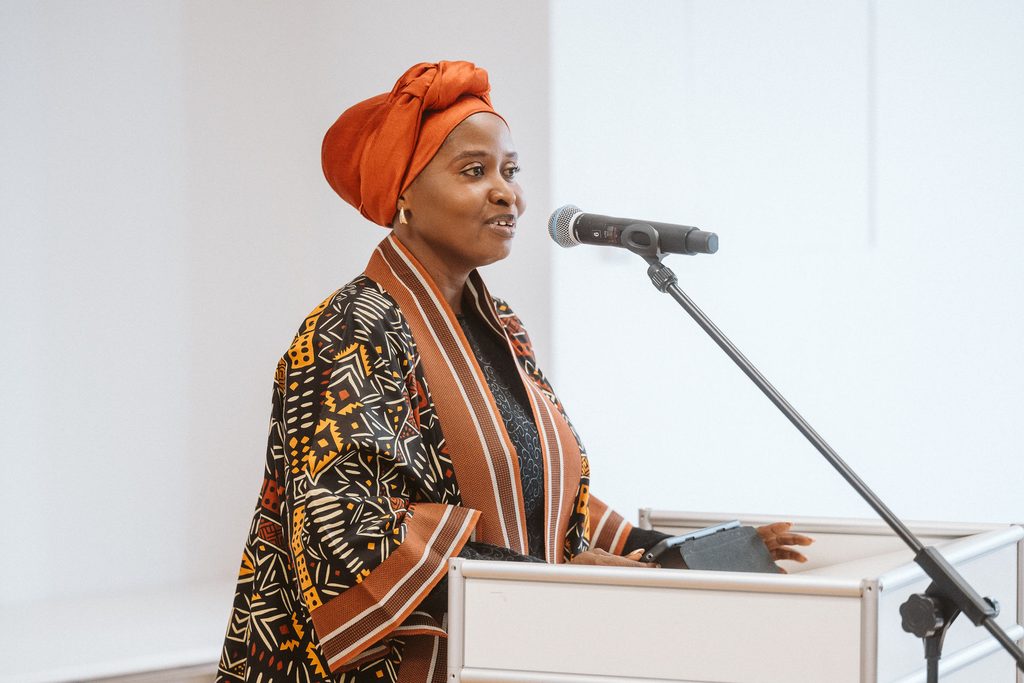
For Dr. Asmau Benzies Leo, Executive Director of the Centre for Nonviolence and Gender Advocacy (CENGAIN Nigeria), this is also a question of whose voices are heard. “A conflict is not forgotten simply because the headlines move on,” she noted. It becomes forgotten when people living with its consequences are excluded from decisions shaping their future. Women and young people, she stressed, must be recognised and empowered not merely as survivors of violence, but as actors and architects of peace, resilience and Nigeria’s future.
“A conflict is not forgotten because the headlines move on. It is forgotten when affected people are excluded from decisions shaping their future.”
Dr. Asmau Benzies Leo
“The conflict isn’t forgotten; it’s neglected. Attention without political will cannot deliver sustainable peace.”
Dr. Oyewole Oginni
From containment to human security
The discussion also highlighted the need to move beyond reactive, military-driven approaches to counter-terrorism and towards human security and locally rooted peacebuilding. Stronger support for civil society, traditional leaders and cross-border community mediation can help communities address insecurity and build resilience.
A key takeaway was the need to move from early warning to early action. Early warning mechanisms can only contribute to preventing violence when political actors respond with timely and meaningful measures.
The gap between attention and action was central to Dr. Oyewole Oginni’s contribution. The Senior Researcher at the Bonn International Centre for Conflict Studies (BICC) described the situation as not forgotten but neglected: “Attention without political will cannot deliver concrete change or sustainable peace.” He called on states to do more to protect both lives and livelihoods.
When livelihoods become a question of survival
The consequences of violence reach far beyond casualty figures. Armed banditry and competition over land and resources have turned everyday survival into a struggle, undermining local livelihoods and work cultures. In many rural areas, weak or absent state institutions leave communities increasingly dependent on local structures of protection, mediation and social cohesion.
Faith-based actors can play an important role in this context – not only in responding to conflict, but also in shaping fair and accountable resource governance. For Rev. Fr. Lawrence Chukwunweike Emehel, Director of the Department of Mission and Dialogue at the Catholic Secretariat of Nigeria, this means giving religious leaders a role beyond conflict response. They “must not be reduced to pacifiers called in when governance fails”, he argued. Instead, they should be part of resource governance itself, acting as “moral vanguards” for proper implementation and equitable distribution.
“Religious leaders belong inside resource governance – not just conflict response.”
Rev. Fr Lawrence Chukwunweike Emehel
The discussion made clear that Nigeria’s violence requires responses that go beyond simplified binaries. Sustainable peace depends on addressing climate and livelihood pressures, strengthening accountable governance, empowering local actors and turning early warning into early action.
Because a conflict is not forgotten simply because the headlines move on. It is forgotten when affected people are no longer heard – and when attention fails to translate into action.
Panelists
- Dr. Asmau Benzies Leo, Executive Director, Centre for Nonviolence and Gender Advocacy (CENGAIN Nigeria)
- Dr. Oyewole Oginni, Senior Researcher, Bonn International Centre for Conflict Studies (BICC)
- Fr. Lawrence Chukwunweike Emehel, Director, Department of Mission and Dialogue, Catholic Secretariat of Nigeria, Abuja
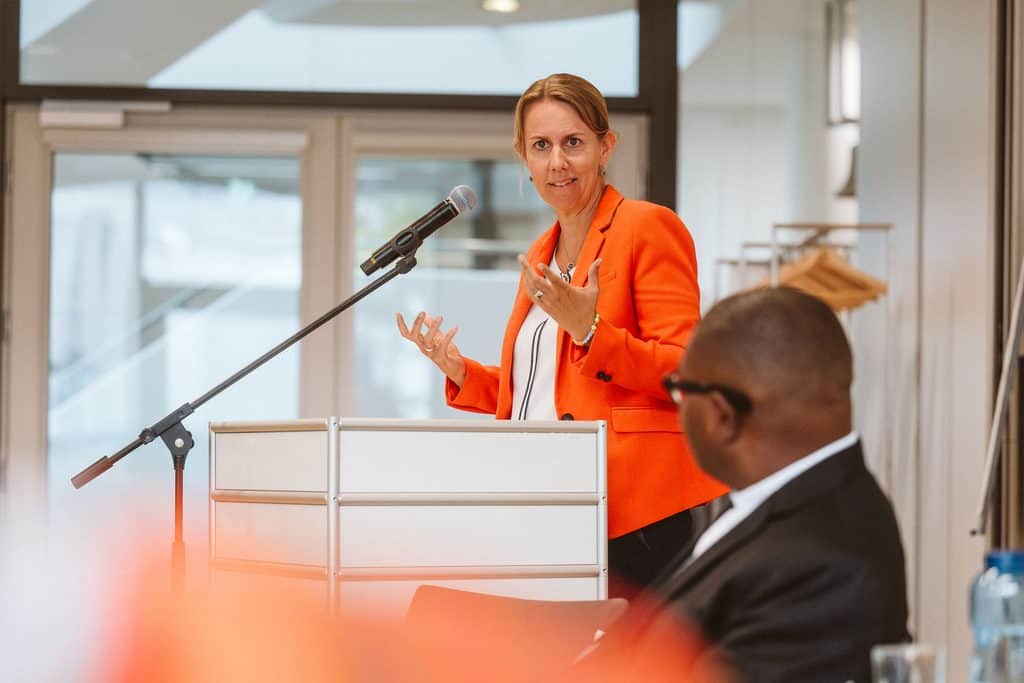
- Annelene Bremer, Senior Policy Officer for Nigeria, West Africa Division, Federal Ministry for Economic Cooperation and Development (BMZ)
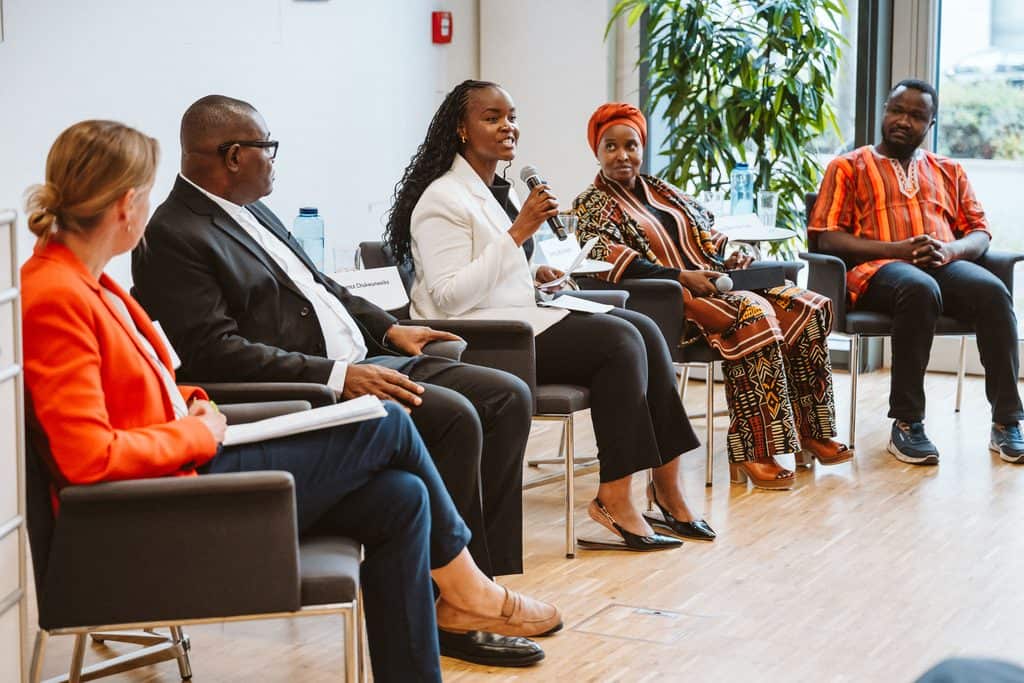
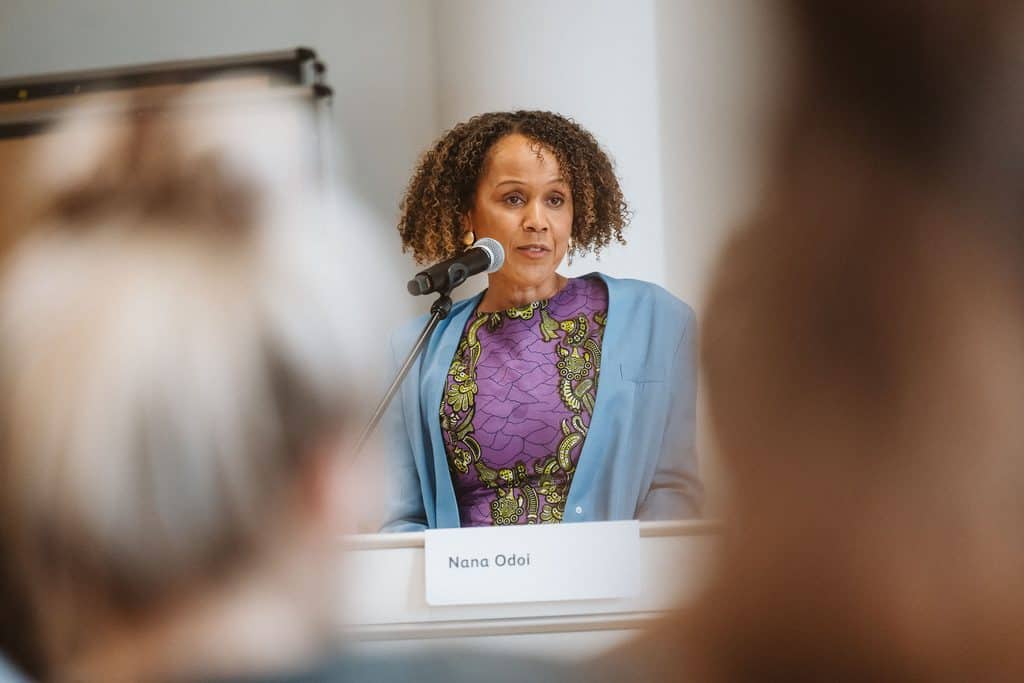
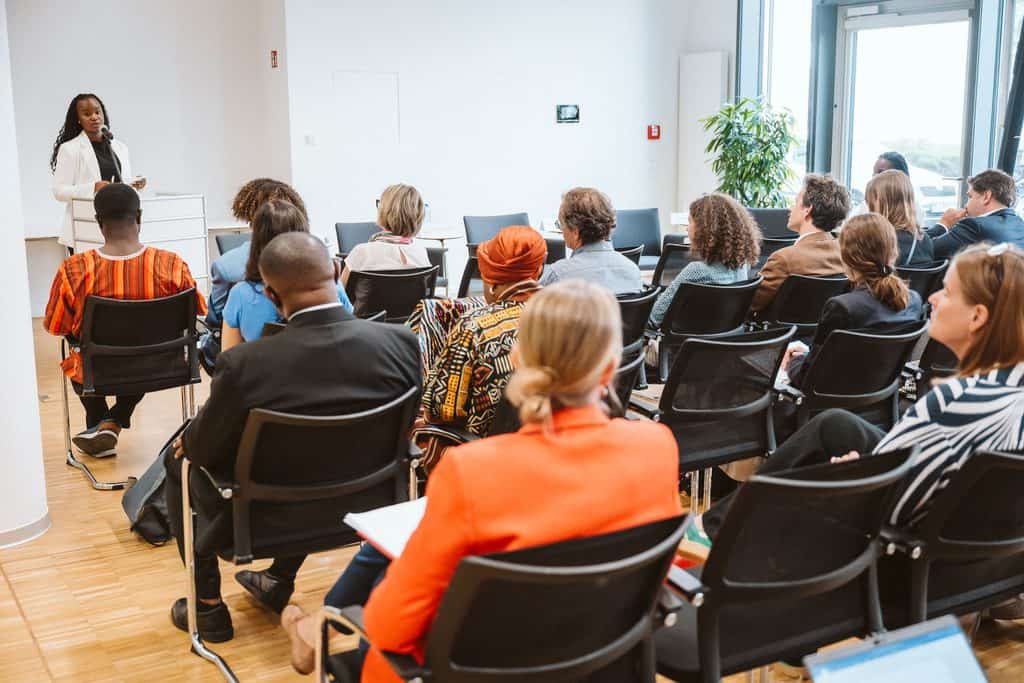
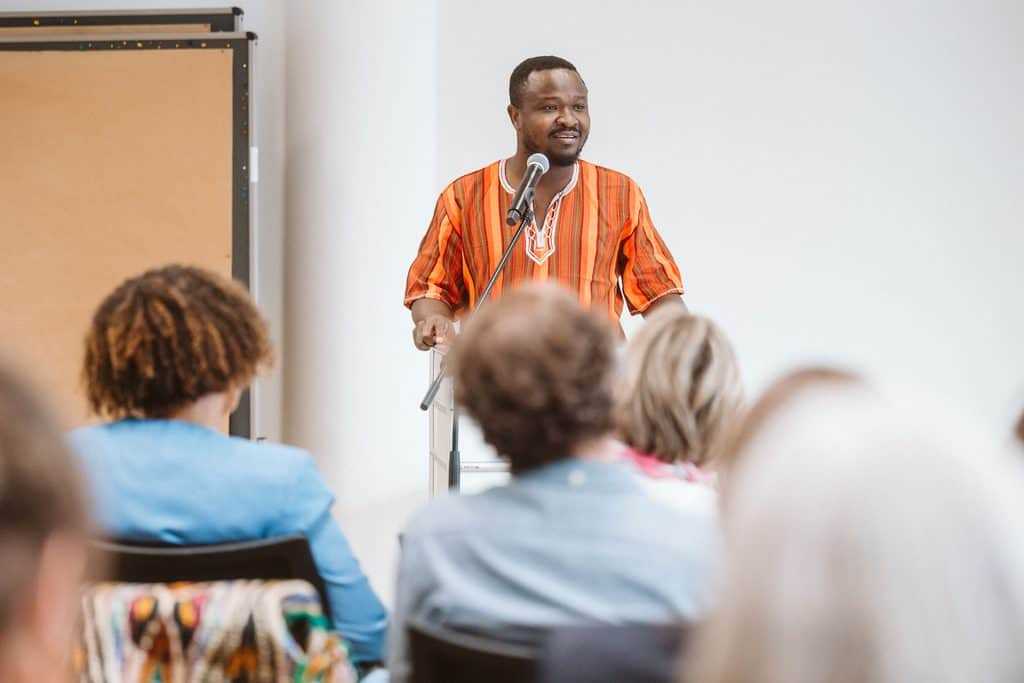
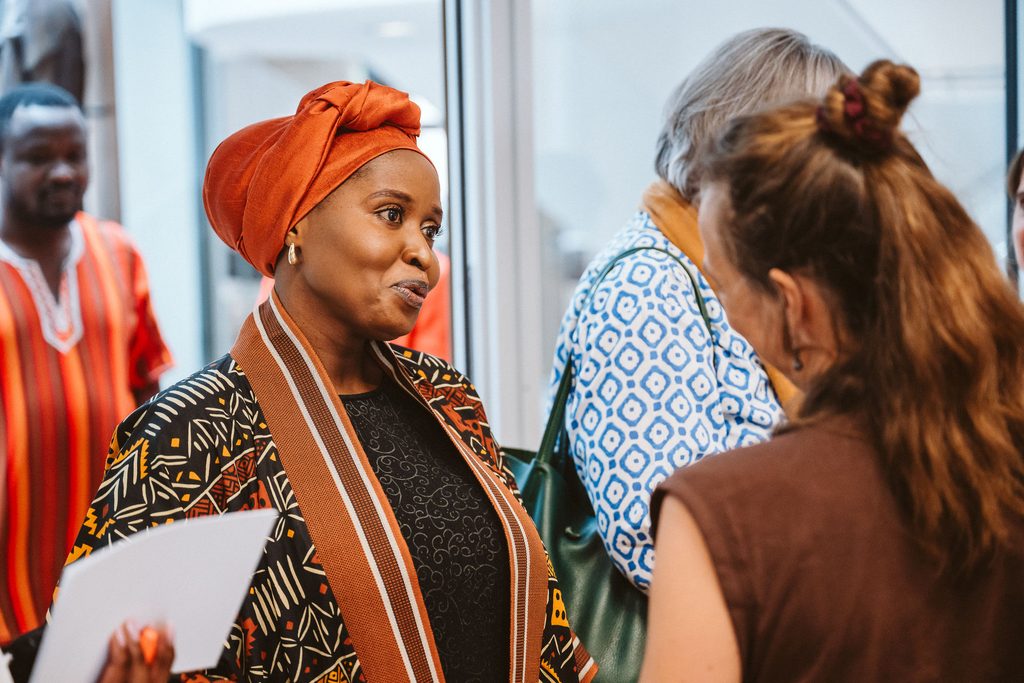
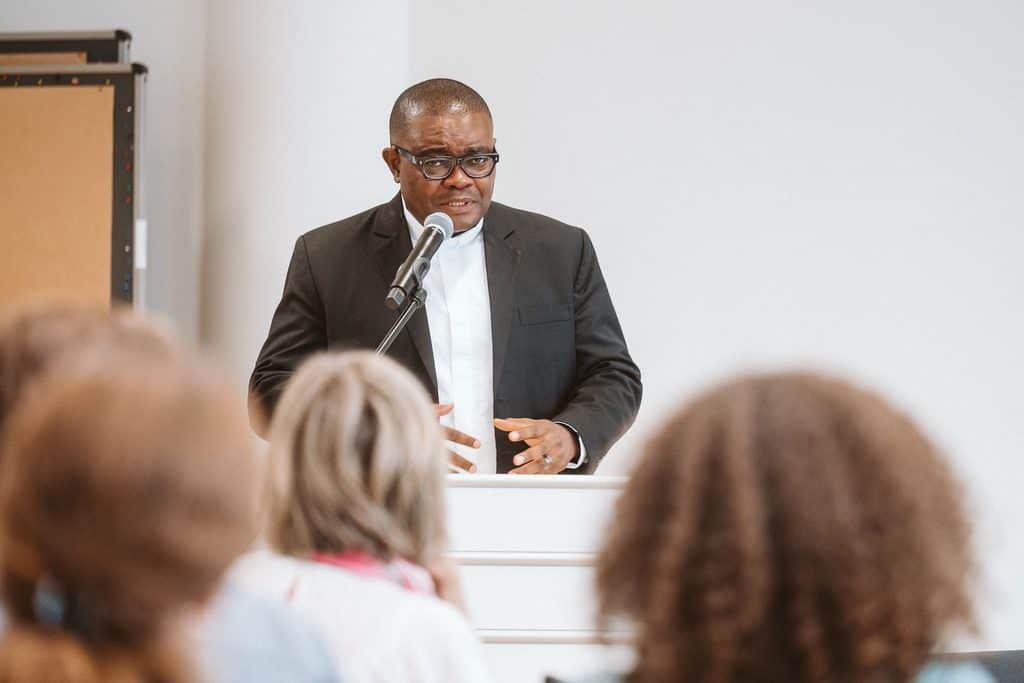
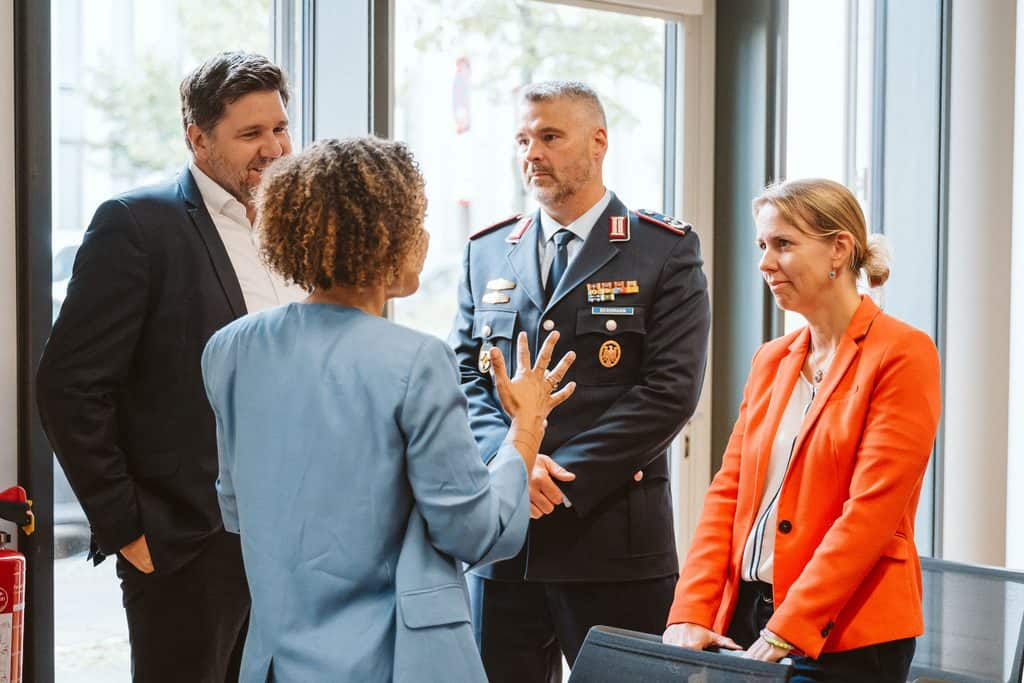
Photos: Kauffmann Studios
More information
- BICC Policy Brief (2025): “Countering Lakurawa Recrutiment in Northwest Nigeria”
- Blog post by Dr. Asmau Benzies Leo on “Rethinking Violence and Restoring Human Security”
