An assessment of the Bonn climate negotiations from FriEnt’s perspective
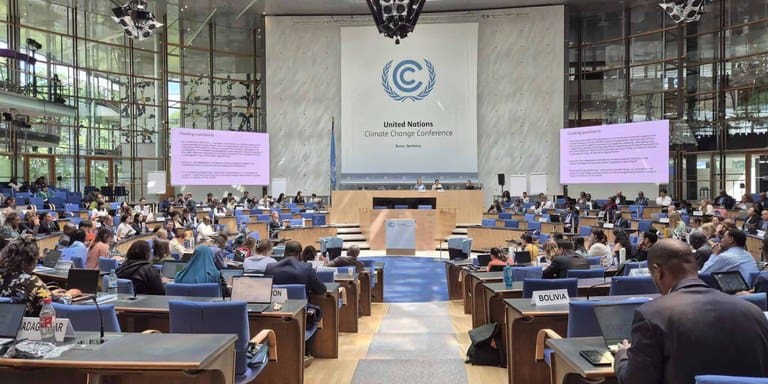
From June 8th to 18th, policymakers, negotiators and representatives of civil society gathered in Bonn for the 64th sessions (SB64) of the United Nations Framework Convention on Climate Change (UNFCCC) Subsidiary Bodies. The meetings, organised by the UN Climate Secretariat, served to prepare for the upcoming 31st UN Climate Change Conference (COP 31) in Antalya in November 2026.
Between ambition and implementation
Under the theme ‘Closing the gap between ambition and implementation’, the SB64 sessions focused on the implementation of existing commitments. This message shaped both the negotiations and the official side events. However, tensions were particularly evident in the areas of ‘adaptation’ and ‘climate finance’, especially regarding the Global Goal on Adaptation (GGA), a key objective of the Paris Agreement. Although the decision to double or triple adaptation funding had already been taken at COP30 in Belém, the states were unable to agree on how this commitment should be enshrined in the negotiating text. Negotiations must therefore restart at COP31 in Antalya.
Climate–peace–security nexus on the sidelines
As the climate-peace nexus is not part of the formal UNFCCC negotiations, it played only a minor role at SB64 as well. Although the UNFCCC Secretariat regularly highlights the links between climate, peace and development, key substantive contributions came primarily from the side events. For example, on June 18th in Bonn, a side event on adaptation finance in fragile and conflict-affected contexts was organised by Brot für die Welt in collaboration with the ACT Alliance, DanChurchAid, ACT Church of Sweden and the Maleya Foundation (Bangladesh), in which FriEnt was also involved in.
Sabine Minninger (Brot für die Welt) presented the Adaptation Index 2025, a civil society analytical tool for assessing the gap between climate risk and adaptation funding. According to the index, around 90 per cent of countries are underfunded relative to their climate risk, particularly Afghanistan, Chad, South Sudan, Somalia and Niger. Minninger called for the implementation of the commitment made in Belém to triple adaptation funding and for tapping new sources of funding. Habib Ur Rehman Mayar (g7+ Secretariat, Timor-Leste) stressed the point that climate actions must be grounded in country-specific realities. However, requirements and regulations for accessing adaptation finance remain too cumbersome for many of the conflict and fragility affected countries. Mrinal Kanti Tripura (Maleya Foundation, Bangladesh) highlighted that the acknowledgement and implementation of Indigenous Peoples rights in particular, and especially the clear application of the Right for free, prior and informed consent (FPIC) enable inclusive decision-making and serves as precondition for sustainability and successful climate action.
Despite the difficult negotiations, climate justice remained a key theme. Many participants referred to the International Court of Justice’s advisory opinion of July 2025, which highlights the importance of a clean, healthy and sustainable environment as a key prerequisite for the exercise of numerous human rights. The Court unanimously confirmed that states are obliged under international law to prevent climate-related damage, and that the 1.5-degree target is legally binding. At the same time, it became clear that climate justice is also a matter of equal participation in international decision-making processes.
No access, no voice: visa barriers for the so-called Global South
However, many civil society actors and delegates from the so-called Global South were unable to attend due to delayed or refused visas. As a result, important perspectives from those regions particularly affected by the consequences of the climate crisis were missing from the discussions.
In context: escalating climate risks and growing security relevance
The SB64 took place against a backdrop of escalating climate risks. According to forecasts, an intensifying El Niño phenomenon could trigger some of the most severe weather extremes in over a century, including extreme heat, flooding and widespread disruption. At the same time, climate change is increasingly being recognised not merely as an environmental problem, but as a threat to human security, development and sustainable peace. Fragile and conflict-affected regions, which have historically contributed very little to global emissions, are among the most affected.
More information


